Recently in Advocacy

Build a Better Block for $1000

For less than $1,000, Oak Cliff performed a make-over of a city block, making it more walkable, bikable, enjoyable and prosperous. Here’s a “before” shot:

Oak Cliff street in the "before" state

See the video for the result of the final transformation, complete with temporary businesses like a cafe, flower market, kid’s art studio and live music.

Visit the Streetsblog.net post for more information on this DIY street makeover.

Is this an event that could work in your town?

Ron and Annetta

I’ve recently written about why INDOT should revise the plan for US 27. to follow Complete Streets principles.

I recently found another reason why INDOT should do this— because it would follows their own policy on Context Sensitive Solutions.

Ashley Hungate, an INDOT spokeswoman was quoted on a topic in a recent article by AARP, covering improvements needed elsewhere in the state to make Westfield, Indiana more bikeable, walking and livable. Here’s the quote:

INDOT strives to design its roadways for all users through its Context Sensitive Solutions policy, Hungate said. It uses community input to strike a balance between providing safe, cost-effective highways and protecting local values. “If we’re doing a project in a community, and they express opinions on what’s important to them, we try to accommodate them when appropriate and feasible,” Hungate said.

And “expressing opinions” is exactly what’s recently happened in Richmond. The City asked for a plan based on Complete Streets and over 100 people petitioned support for it.

I looked up the Context Sensitive Solutions program and found that “making streets more bikeable is often a goal of CSS projects”. CSS is also used to implement bike and pedestrian bridges like the Freeman Park / Oak Drive Connector which would truly be an improved and viable alternative to US 27 for non-motorized traffic.

With so many reasons to support Complete Streets in Richmond, I hope INDOT will respond soon to let us know that they will be following the new federal transportation policy as well as their own policies regarding accomodations for walking and biking.

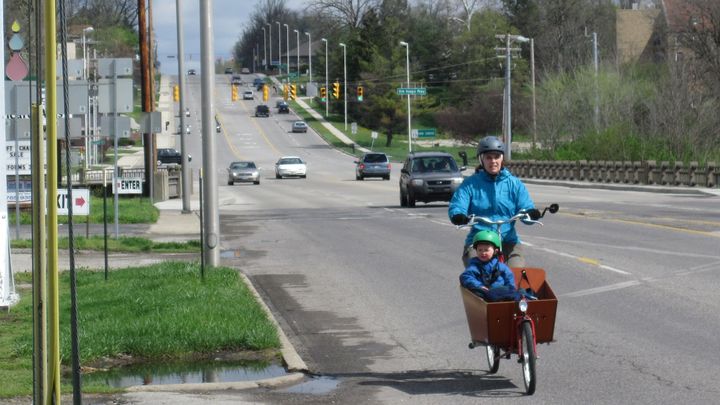
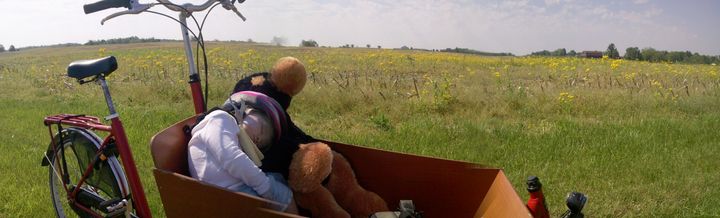
detour on the way to church

I’ve recently mentioned the summary of the current federal transportation policy for bicycling and pedestrian accomodation which was signed on March 10th, 2010.

The document is accessible and relatively brief. I recommend reading through it yourself, but have included below some key highlights I believe are of interest to those advocating for improvements for bicycling in federally funded projects (which includes many state projects).

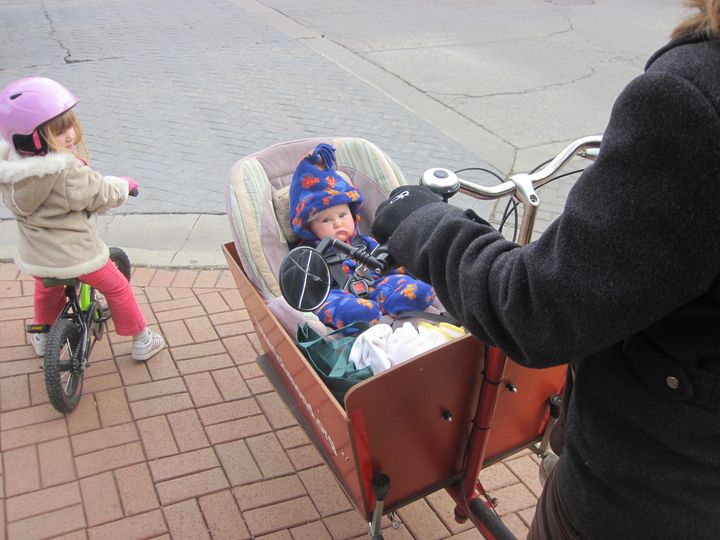
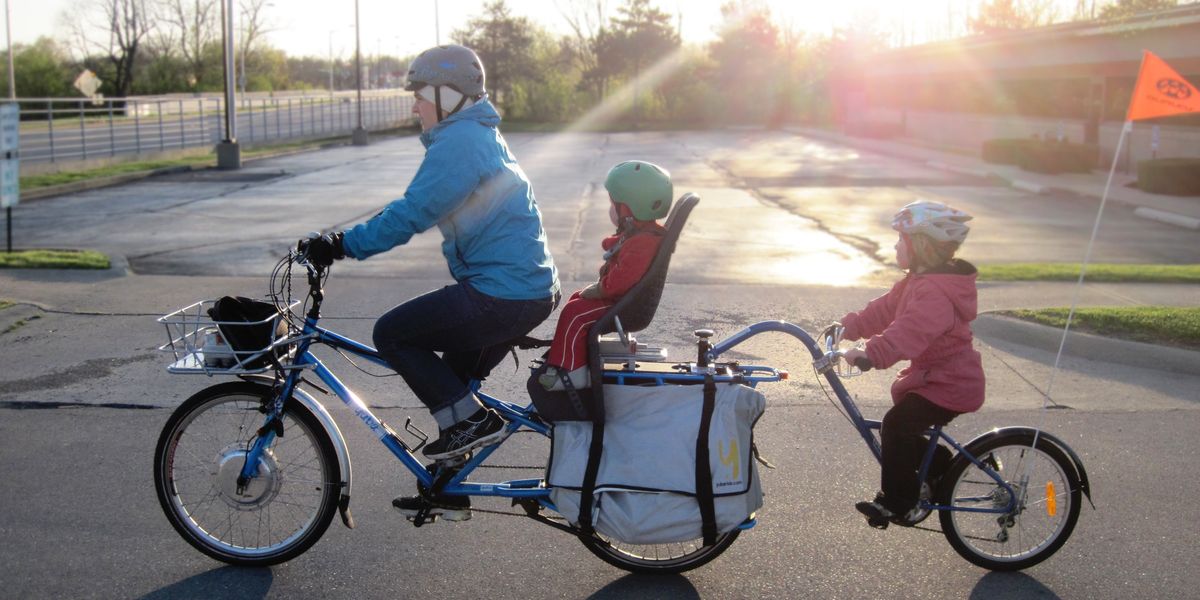
she climbs in herself
Public roads should be for all users, serving this generation and the next.

Our recent Complete Streets campaign was a success in the sense that we were able to give feedback early enough in the process to make a difference.

Unfortunately, I owe this to a chance encounter in a grocery story, where someone mentioned the public hearing to me. As a leader of a local bike advocacy group, you would think it would be easy for me to be in the loop about major road projects so I could provide feedback on it. But since I’ve been in Richmond, I’ve seen two other major road projects begin construction before I even realized they were in the design phase.

If you’d like to better understand the “public involvement process” of INDOT or your state’s Department of Transportation, here’s what I’ve learned thus far.

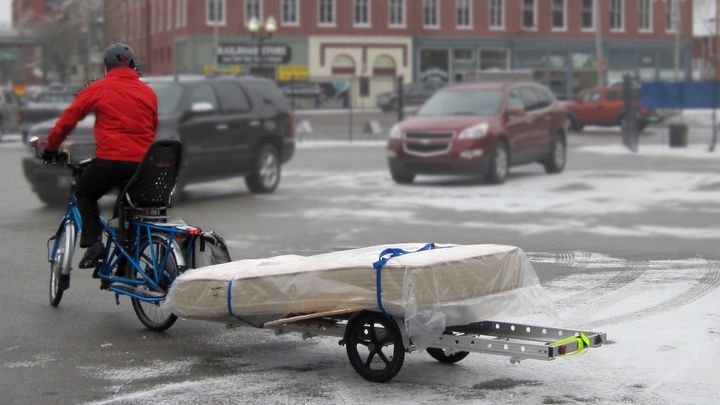
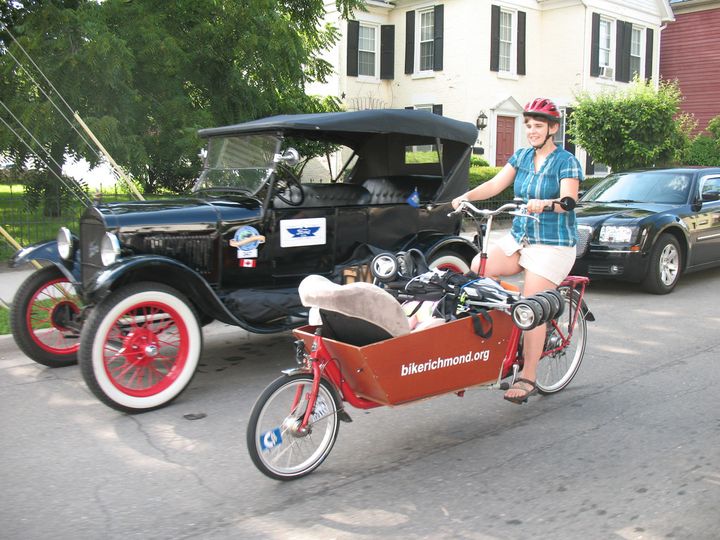
bakfiets, car seat, stoller and Model T

On Friday Mayor Sally Hutton sent in the City’s official public response to INDOT’s proposed renovation of U.S 27. This phase of development starts near the Whitewater River near the Old Reid Hospitals and continues south through town. On behalf of the City, she asked INDOT for a new proposal, one based on Complete Streets principles that produce streets that work for everyone including pedestrians and cyclists. A new proposal could address serious concerns with the current proposal which would speed up traffic as it enters downtown, as well as leaving a major gap in our recommended bike route network.

The City’s response turns to be directly in line with a new policy released by the United States Department of Transportation on March 11th.

Here’s an excerpt from the new federal transportation policy:

“The DOT policy is to incorporate safe and convenient walking and bicycling facilities into transportation projects. Every transportation agency, including DOT, has the responsibility to improve conditions and opportunities for walking and bicycling and to integrate walking and bicycling into their transportation systems. Because of the numerous individual and community benefits that walking and bicycling provide — including health, safety, environmental, transportation, and quality of life — transportation agencies are encouraged to go beyond minimum standards to provide safe and convenient facilities for these modes.”

Although the City of Richmond and the Federal Government are on the same page this, we still need public support to bring this message to INDOT so they can revise the design.

Please visit this petition by March 18th to view the City’s full response to INDOT as well as signing the petition of support:

http://www.thepetitionsite.com/2/complete-streets-richmond-indiana

In my last post, I mentioned the Complete Streets concept. For a quick visual introduction I recommend leafing through the Complete Streets introduction slideshow:


Complete Streets

Here’s a PDF of the Complete Streets intro slideshow hosted by Madison County, Indiana where a Complete Streets resolution has already been passed. You can read more about Madison County’s Complete Streets efforts if you’d like. And if you like the presentation above and what to remix it for your community, you are welcome to do so with attribution to Complete Streets. The original PowerPoint for the files are here.

If you’d like a rather technical argument for the approach, I enjoyed reading Eric Dumbaugh’s research on the safety of livable streets published in the Journal of the American Planning Association.

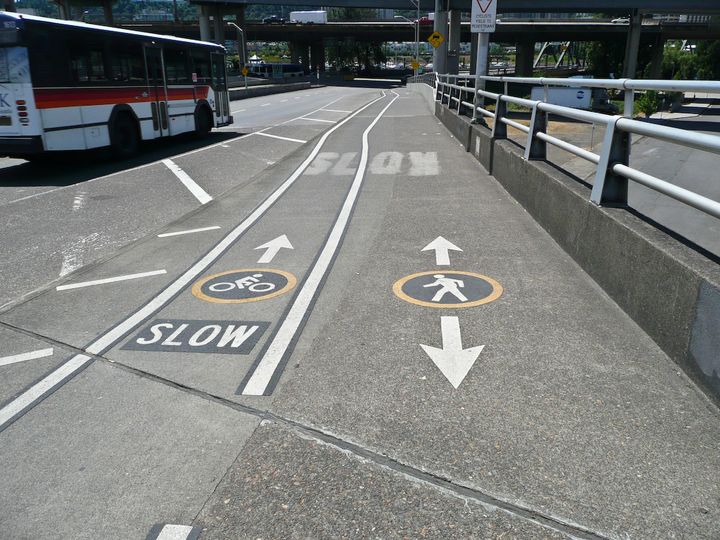
marking lanes for shared bike / pedestrian sidewalk a shared use sidepath in Portland, Oregon.

Complete Streets refers to the concept of designing and operating roadways with all users in mind - including bicyclists, public transportation vehicles and riders, and pedestrians of all ages and abilities.

Yesterday I was leafing through hundreds of pages of documentation about the U.S. 27 renovation through Richmond, and the importance of this hit home.

The documentation showed the many kinds of coordination and considerations that the state must go through to complete something which to some could appear to routine maintenance. During the “Early Coordination Phase” there are required considerations for hazardous waste, air quality, water quality, wildlife, historic homes, social justice, and the list goes on.

Incredibly, although the project at hand is for transportation, there were not signs of due consideration given how the road update could impact other kinds of road uses besides driving cars. A “Complete Streets” policy would require this basic consideration.

Critical Mass, Richmond, Indiana, August 2007

This message is a public comment on INDOT’s proposed renovations of U.S. 27 as it it passes through Richmond, a project budgeted at $21 million.

I support the City of Richmond’s response on DES#0100701 and offer the following in support of it.

What’s wrong with the current proposal

  • The current proposal would speed up traffic at North C Street as it enters downtown, without any consideration of the negative effects and reduced safety that higher traffic speeds have on pedestrians and cyclists.

  • Against current federal transportation policy, it makes no accommodations for bicycling.

Charleston gets Chic

| 1 Comment
Charleston's got the right idea:


That's what I'd like bikes-as-transportation to look like more cities in the US.

Embedded in the video you may see some mentions of Pedal to Properties, a real estate designation system based around realtors showing homes by bike. That's another idea I love, I agree with their pitch that it could just the thing to help a realtor stand out in a challenging market. I know I certainly would have gravitated to such a realtor if one was using the program here in Indiana.

garden harvest by bike Indiana currently has a significant bike bill under consideration, Senate Bill 553. Bike Michiana, who helped draft the bill, has a good summary. There’s also discussion at Bike Richmond.

One of the many proposed changes in the law is a mandatory helmet law for those under 18 years of age.

Mandatory helmet laws are a point of controversy of cyclists, and many cycling organizations and cycling advocates, including myself, don’t support them. There are many well-documented reasons to not support a mandatory helmet law, backed up by research. Wikipedia has a good overview, and Bicycle Helmet Research Foundation has much to say against mandatory helmet laws, and the British Medical Journal has come out strongly against mandatory helmet laws.

A compelling proposal for mandatory helmets would at least address the major, well-documented reasons for not having such a law. Instead, this proposal offers only two weak justifications.

First, there’s the suggestion that we should make a law that is consistent with a minority of states. One could just as well argue that we should stay with the majority of states who don’t have such law. Then there was suggestion that would be good to be consistent with laws that apply to motorcycles, a vehicle that can travel much faster and thus more dangerous to operate. That’s like suggesting it would be a good idea to make motor vehicle safety laws that would be consistent with safety regulations of NASCAR drivers, who wear helmets inside their cars.

Helmets.org, a pro-helmet site publishes statistics about the number of fatal bike crashes that happen to kids to who would be affected by this law, during the hours which they may traveling two and from school. (Search on this page for Indiana). In that report they report zero fatalities for Indiana. That’s not the kind of crisis that sounds like we need new laws to address.

The reality here in Indiana is that beyond the general reasons for opposing mandatory helmet laws, we have other problems that complicate the alleged benefits. Most importantly, we have a lack of education among our cyclists, and among our drivers about cyclists. From what the Indiana Bicycle Coalition relayed to me fatal bicycle crash statistics in this area, a major contributor to these was not the lack of a helmet, but unsafe, and sometimes illegal, cycling which set the stage for the accident in the first place. Education can prevent accidents to happen at all, while a helmet cannot. Now on the one hand we lack bike safety education, on the other we lack enforcement of bike safety regulations.

A mandatory helmet law does nothing educate children about riding on the correct side of the road. And if our current bike laws aren’t being enforced, adding yet another just adds to the sense that the laws are meant to be followed, or are there to be enforced selectively against “bad kids”.

There are more effective ways for the Indiana government to support cycling and cycling safety, which I’ll cover separately.

As an experienced rider, a parent, and founder of Bike Richmond, I don’t support a mandatory helmet law. I find the rest of the proposed Indiana Senate Bill 553 to be a mixed bag. I’ll post more thoughts other details of the bill to Bike Richmond soon.

recent bike photos

www.flickr.com
Powered by Movable Type 4.35-en

About this Archive

This page is an archive of recent entries in the Advocacy category.

Bike Route Mapping is the next category.

Find recent content on the main index or look in the archives to find all content.