Recently in Cargo

Recommended blog: BikeForth.org

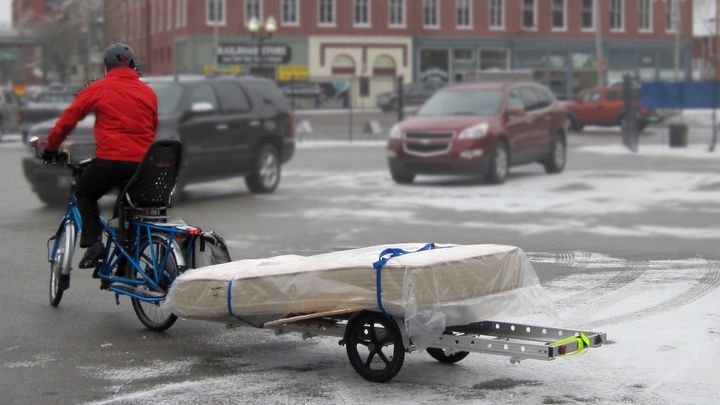
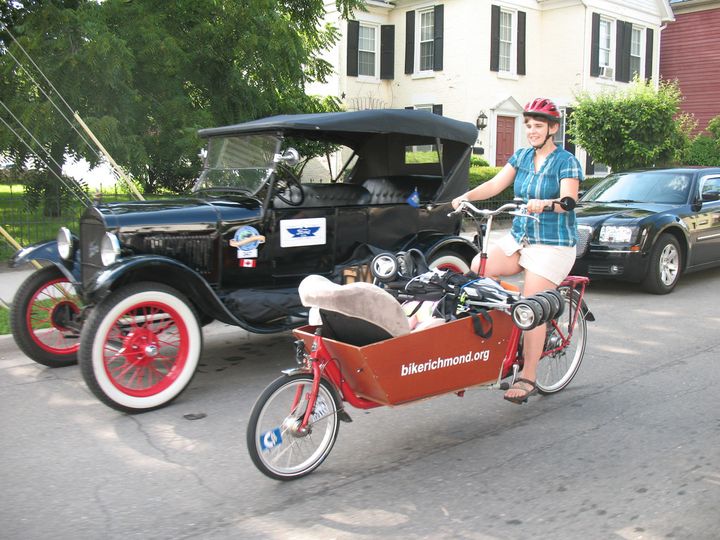
Photo for Bike wagon canopy, by Larry from Bikeforth.org

Larry from Bikeforth.org is one of my favorite cargo bike bloggers. He’s an inventor, a trail-blazer, and a well-spoken documenter. If you like my blog, you’ll likely enjoy his. Here are some of my favorite posts of his so far:

There are a number more worthwhile posts in there— poke around!

Electric Cargo Bike as Grocery Getter

Grocery Trip

  • Two 45 Gallon Totes by Sterlite + the Go Getter bag provide 340 liters of hauling volume
  • Up to 300 lbs of cargo reasonably hauled (in addition to the rider)
  • Bar mitts keep hands warm without bulky gloves or mittens
  • Schwable Winter Marathon carbide-studded tires for traction on ice
  • Electric system provides up to 20 mph of assist reliably for 20 continous miles (longer if you pedal more)
  • Much less effort getting up hills, even with a load.
  • Bright front and rear LED lights are powered by pedaling if battery fails
  • Super-stable double-sided kickstand
  • Recharges overnight in the garage for pennies

We’re able to haul more stuff further, faster, with less effort and greater comfort than ever before (like loads of recycled computers, or two children and camping gear). Compared to the alternative of having a second car, the system more than pays for itself.

My electric Yuba Mundo was built and sold by Cycle 9. Trailer by Bikes at Work is expandable to 8 feet for longer loads, like couches. Combining this trailer with this bike currently requires a bit of custom welding.

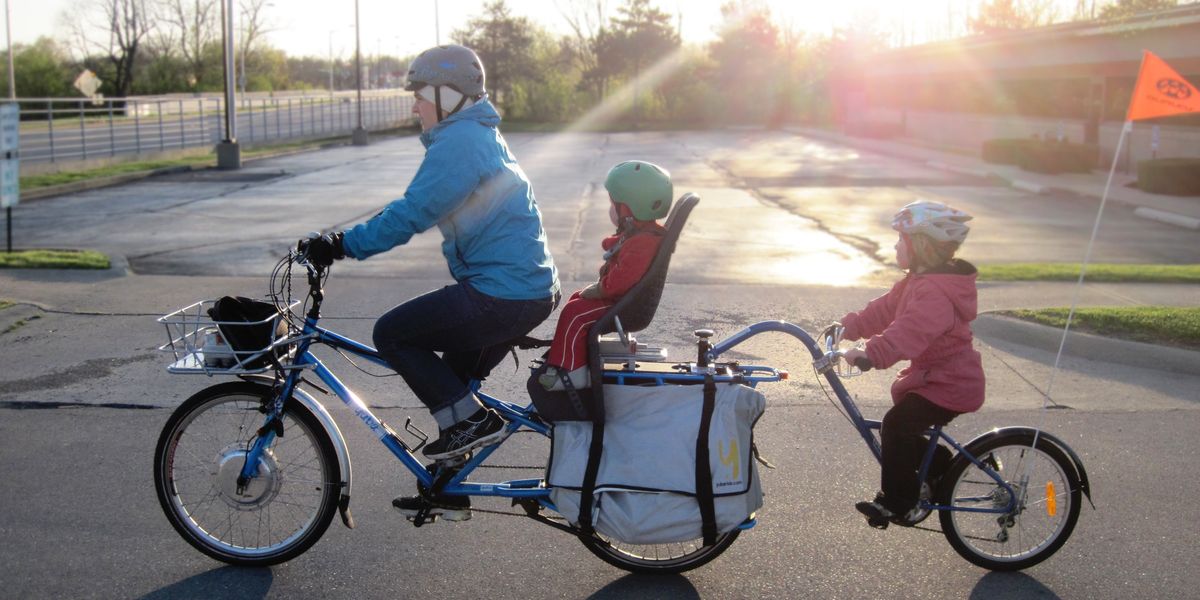
eMundo with trailer, bar mitts on greenway

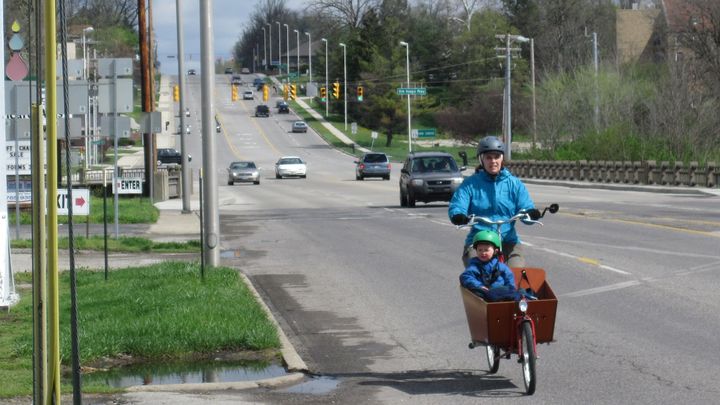
The electric Yuba Mundo works well asa kid & cargo winter bike. Recently I’ve been trying out Bar Mitts which so far seem to very effective at keeping my hands warmer while allowing me to wear thinner gloves inside of them. Compared to the bakfiets, the child needs to be dressed notably warmer. Since this photo was taken, we’ve also gotten some child ski goggles for her as well. In sum, we’re able to make cross-town trips comfortable at 15F (-9.4C) which is about as cold as it gets here in Richmond, Indiana.

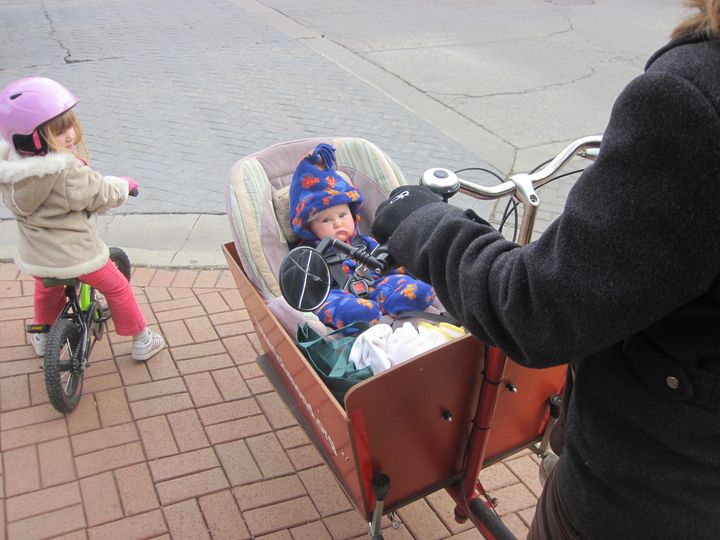
The bakfiets makes it easier to keep the child warm with the greenhouse-like canopy, and the fully enclosed chain guard is definitely a plus for the bakfiets— On the eMundo the drive train got clogged with frozen slush in just about 15 minutes on a cold day— it was easy to clean out a little later with a stick, but no fun— plus the eMundo chain will need to be cleaned more after getting wet.

However, what the eMundo has going for it is a motor which allows me to get places faster and spend less time outside on very cold days. For that reason I currently prefer the eMundo to the bakfiets for most winter uses. The Mundo’s electric motor smoothed over the problem with the slush— while pedaling became “chunky” due to that issue, the motor could pull me along just fine without pedaling anyway.

Here’s same scene in a bakfiets from the previous winter:

box biking at 10F

Christmas Tree by Bike, 2010

Christmas tree by bike, 2010

In previous years I had done the Christmas tree recycling by bike, but this was first year I picked up the Christmas tree by bike. It was about a 15 mile round trip to the tree farm in Centerville, with snow falling and temps in the mid 20's.

The trip went fairly well, although the drivetrain got frozen slush in the derailleur, causing chunky pedaling. I cleared out the frozen slush at the tree farm, but it happened again on the way back.

There was a stiff headwind on the way back and my hands got cold despite wearing Windstopper gloves inside of overmitts. I stopped at the bike shop on the way home and and bought some Bar Mitts, which are like large mittens that go over the handlebars and shifters, and stay on the bike. I have high expectations for the ability to keep my hands warm and comfortable on cold bike trips. Bar Mitts do seem priced a bit high for a product that has a fairly simple design and is made in China. After I got home I found there are some similar products targeted at motorcycles that are made in the USA and cost less. I'll post more about the Bar Mitts once they've gotten some more use.

Hauling a large load of e-waste on the Yuba Mundo

Today I hauled between 600 and 800 pounds of e-waste from the hardware co-op at church to the annual e-waste recycling event hosted at Earlham College and serviced by RecycleForce.

To haul that volume by bike, I used this Yuba Mundo with an 18 gallon container strapped to each side-loader racks along with this Bikes-at-Work trailer. On the trailer I’ve stacked a 45 gallon container and a 36 gallon container.

electric cargo bike charging station click photo to see charger, connector and battery highlighted on Flickr

A lot of people ask how the electric cargo bike charges, so I thought I would post a photo.

It’s essentially the same process you would use with rechargable digital camera batteries, only with a bigger battery and a bigger charger.

Our LiFePO4 battery is size of a miniture loaf of bread and can be easily unplugged from the bike and plugged into a charger. The claim is that this needs to be done every 15 to 35 miles. Based on our usage, it appears that it may be more like 30 to 50 miles. (Because we don’t always engage the electric assist).

It turned out I had a rather ideal situation in my garage, with a electrical outlet directly above where we usually park the bike. So, here you can see our charger mounted to a pole, and the battery is literally just “plugged in” with an XLR connector while still attached to the bike.

With this battery it’s also healthy for it to keep it fully charged, so we can simply plug it in when the last ride for the day is done. Because the range exceeds our daily needs, this process implies that the electric assist is always available when we need it.

In sum, it takes just seconds to charge at an estimated of cost of less than a penny per mile. By contrast, I once calculated the total cost of operating my wife’s station wagon. It worked out that to require about one hour of work for to pay for every one hour of driving the car. That’s not exactly efficient if you factor all the money-earning time into your True MPH for driving your car.

If you are curious about your own true average speed in your vehicle you can download a spreadsheet I made to calculate it for yourself.

For more stories and photos about our electric cargo bike, see the related photo set on Flickr.

Hauling a 32 foot ladder by bike


This is Ron's solution for getting a 32 foot ladder home from the store.

The store is only about 2 miles away, and the ladder weighs only about 50
pounds, so using a using 4,000 car seems like a particularly inefficient
solution, assuming Ron had actually found vehicle he could use that was capable
of carrying such a long load.

One alternative would have been to have it delivered by truck for $60, adding
20% to the cost. He could have potentially strappped it to the top of a large
truck or van, which could have involved driving to the van location, driving
the van to the store, driving home, driving back to the van the location, and
driving back home again. The time involved in that process could easily take longer
than just riding to the store and back by bike.

By using this Bikes-at-Work trailer, Ron was able to efficiently accomplish the task and enjoy a nice ride as well. Since the ladder was not particularly heavy, it didn't require a great amount of effort to carry it on the trailer.

The Bikes-at-Work comes in three sections. Extra sections can be left at home
if you don't need them, and the axle location can changed to suit the task at hand.
Here we put the axle all the way at the rear of the 8 foot trailer so that it easily
balances the 16 foot load.

recent bike photos

www.flickr.com
Powered by Movable Type 4.35-en

About this Archive

This page is an archive of recent entries in the Cargo category.

Bike Route Mapping is the previous category.

Clothing is the next category.

Find recent content on the main index or look in the archives to find all content.